
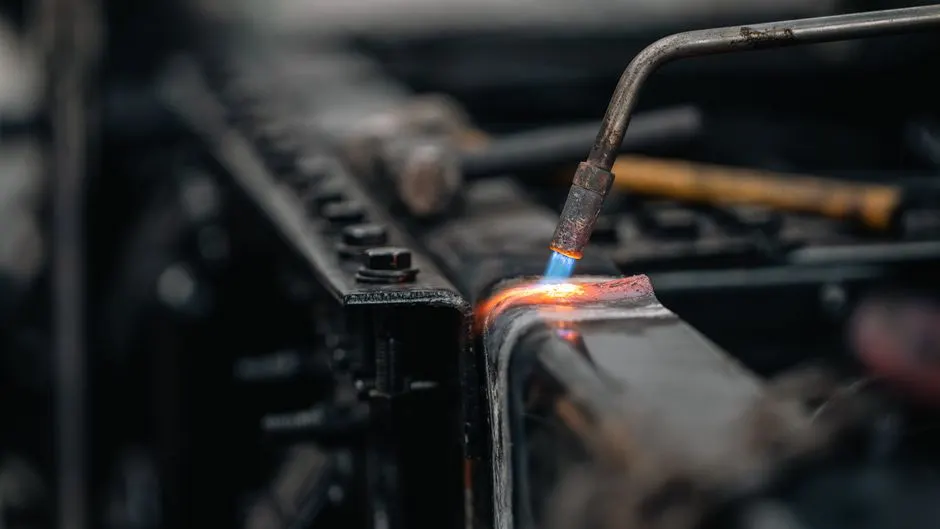
Full Sequence Diagnostic
We test the thermostat call, inducer motor, ignition, flame sensing, blower, and temperature rise end to end. That is how we find the actual failure instead of replacing parts until something works.
Every repair call is a full diagnostic, not a guess-and-swap. Here is what comes standard on the ticket, and what we quote separately if your system needs it.
We test the thermostat call, inducer motor, ignition, flame sensing, blower, and temperature rise end to end. That is how we find the actual failure instead of replacing parts until something works.
A flue gas analyzer confirms the furnace is burning clean and carbon monoxide is at safe levels before we leave. If the heat exchanger is cracked, this is where we catch it.
Igniters, flame sensors, thermocouples, gas valves, capacitors, blower motors, inducer motors, limit switches, control boards, and transformers are all fair game. We use OEM-spec parts that match your brand.
While the cabinet is open, we brush the burners, clean the flame sensor, and clear the inducer port. This is the maintenance that prevents the same call next season.
We measure static pressure with an anemometer, check the blower wheel for buildup, and confirm your filter is the right MERV rating for the system. Wrong filters choke airflow and shorten motor life.
Two full heat cycles, a temperature rise reading inside manufacturer spec, and a written summary of what failed and what we did. You get the paperwork for your records and any warranty claim.
Furnace Repair in Idaho is the diagnostic and mechanical work that finds why a gas or electric furnace stopped heating and returns it to safe, code-correct operation. A real repair call starts with a full sequence test: thermostat signal, inducer motor draw, ignition, flame sensing, blower operation, and temperature rise across the heat exchanger. We test the igniter, flame sensor, gas valve, capacitor, limit switch, and control board with a multimeter and clamp meter, then confirm combustion with a combustion analyzer before we call the job done.
Most Idaho furnaces we see fail for the same handful of reasons: a dirty flame sensor that shuts the burner down after three seconds, a cracked heat exchanger on a 20-year-old unit, or a blower motor that finally seized after a summer of dust. Cold snaps push systems that were already marginal, and that is when the phone rings. If you need emergency Furnace Repair in Idaho at 2 a.m. in January, we run 24/7 dispatch and treat no-heat calls as priority one.
No mystery, no runaround. Here is the exact path from your first call to a warm house, whether you are in Kuna or Soda Springs.
Schedule
Call or book online — a real human picks up and confirms a 2-hour arrival window.
Diagnose
Licensed tech inspects on-site, then walks you through the cause and your options.
Fix
The job is completed to code and done right the first time — no shortcuts, no surprises.
Guarantee
Every job backed by a written workmanship warranty — and we stand behind it.
Manifold gauge set
Reads gas pressure at the valve and manifold so we can confirm the furnace is getting the pressure the manufacturer specifies, not just enough to light.
Combustion analyzer
Measures flue gas oxygen, carbon dioxide, and carbon monoxide. This is how we verify the furnace is burning clean and safe after a repair.
Multimeter and clamp meter
Tests voltage, continuity, and amp draw on the igniter, gas valve, blower motor, and control board. Amp readings catch a motor that is about to fail.
Thermocouple tester
Confirms whether a standing-pilot furnace is generating enough millivolts to hold the gas valve open. Saves guesswork on older units.
Anemometer
Measures airflow at the registers and static pressure in the ductwork. Poor airflow is behind a lot of short cycling and high-limit trips.
Fin comb and tube brush
Straightens bent condenser fins and clears burner tubes and heat exchanger passages so airflow and combustion stay where they belong.
Vacuum pump
Used on heat pump and dual-fuel systems when refrigerant work is needed alongside furnace repair. Pulls a proper vacuum before recharge.
NATE-certified diagnostics
Every tech works to NATE Certification standards, which means a documented sequence test instead of a parts swap. We test, we measure, we confirm, and we log the results on the ticket.
ACCA and ANSI/ASHRAE airflow standards
We size and verify airflow to ACCA Standards and reference ANSI/ASHRAE Standards for combustion and ventilation. That is how a repair stays code-correct and does not create a new problem.
EPA Section 608 compliance
On heat pump and dual-fuel systems, refrigerant handling follows EPA Section 608 rules. No venting, no shortcuts, and proper recovery on every job.
OSHA Safety Compliance
Gas work, electrical work, and rooftop or crawlspace access all run under OSHA Safety Compliance. Your house stays safe and so does the tech working in it.
01
What we do: We treat it as an emergency no-heat call, dispatch the nearest tech, and run the full sequence test on arrival. If it is a flame sensor or igniter, we have it on the truck and the heat is back within a couple of hours.
→ Warm house before lunch, a written price you agreed to upfront, and a 1-year warranty on the repair.
02
What we do: We diagnose the root cause, which is often a failing blower motor or a clogged filter choking airflow. We replace the motor, clean the blower wheel, and verify temperature rise is back in spec.
→ Tenant stops calling, the breaker stops tripping, and the furnace runs full cycles instead of short bursts.
03
What we do: We come out, find the inducer motor is seized and the burners are caked with dust, replace the inducer, and clean the burner assembly. Combustion analysis confirms the flue is drafting correctly before we leave.
→ Heat restored the same day, no carbon monoxide risk, and the cabin is ready for the rest of the season.
04
What we do: We walk through the math: repair cost versus a new high-efficiency unit, plus the safety issue of a cracked exchanger. If replacement makes more sense, we quote it and handle the install.
→ A clear decision, no pressure, and either a safe repair or a new furnace sized correctly for the house.
Idaho winters are not one climate, they are four. The Panhandle around Coeur d Alene sees wet, heavy snow and long stretches below freezing, which stresses igniters and inducer motors. The Snake River Plain from Blackfoot to Soda Springs runs dry and cold, and the temperature swings between day and night crack heat exchangers on older units. Mountain towns like Tetonia and Placerville hit single digits and stay there, so a furnace that is marginal anywhere else will fail there first. Building stock matters too: a lot of Idaho homes still run 1990s standing-pilot furnaces with thermocouples, while newer subdivisions in Kuna and Fruitland have high-efficiency condensing units with condensate drains that freeze if they are not trapped correctly. We carry parts for both eras on the truck. When you need affordable heating repair in Idaho, knowing which climate and which generation of furnace you are walking into is half the job. The other half is showing up when we say we will.
Treasure Valley (Kuna, Melba, Murphy)
Fast-growing subdivisions with newer high-efficiency furnaces. Condensate drain freeze-ups and undersized returns are the two most common calls here.
Snake River Plain (Blackfoot, Aberdeen)
Older housing stock with standing-pilot furnaces. Thermocouple and gas valve failures dominate, and we keep both on the truck for these routes.
Coeur d Alene and the Panhandle
Wet, heavy snow and long freezes. Inducer motors and pressure switches fail more here than anywhere else in the state.
Teton Valley (Tetonia, Driggs)
High elevation and hard cold. Combustion air and flue draft need extra attention because thin air changes how the furnace burns.
Sub-zero cold snaps that push furnaces past their limits
A furnace that short cycles in mild weather will lock out entirely at 5 below. We see a spike in no-heat calls within 24 hours of every hard freeze and staff for it.
Dry air and wide day-night temperature swings
Thermal expansion and contraction stress heat exchangers and crack them over time. We inspect the exchanger on every repair call, not just when a customer complains.
High-elevation combustion in mountain towns
Thinner air changes the air-fuel mix, so furnaces in Tetonia and Placerville often need derating or a combustion air adjustment to burn clean.
Rural properties on propane instead of natural gas
Propane furnaces need different orifice sizing and pressure settings. We carry the conversion kits and gauges to service both fuels on the same route.
Most no-heat calls come down to a short list of failures. Here are the ones we see most, what happens if you ignore them, and how we get you warm again.
Problem
The blower runs but the burner never lights, so you are circulating cold air and burning electricity for nothing. In a hard freeze, pipes in exterior walls can start to ice within hours.
Our Fix
Nine times out of ten this is a dirty or failed flame sensor, a bad igniter, or a tripped limit switch. We test each one, replace what failed, and clean the sensor so it reads the flame correctly on the next cycle.
Problem
Short cycling wears out the igniter, inducer motor, and control board fast, and it never lets the house reach setpoint. Left alone, it usually ends in a mid-winter breakdown.
Our Fix
Common causes are an oversized furnace, a clogged filter, a failing high-limit switch, or a thermostat malfunction. We check airflow, temperature rise, and limit operation, then fix the root cause instead of just resetting the fault.
Problem
On a high-efficiency condensing furnace, a clogged condensate drain can back water into the cabinet and rust the heat exchanger. A burning smell often means dust on the burners or a failing motor.
Our Fix
We clear and re-trap the condensate line, inspect the secondary heat exchanger for corrosion, and clean the burners. If the smell is electrical, we trace it to the transformer or control board and replace it before it fails.
Problem
A breaker that trips on every heat call points to a shorted blower motor, a bad capacitor, or a wiring fault. Loud banging or screeching usually means a failing motor bearing or a loose blower wheel.
Our Fix
We test the motor windings with a clamp meter, check the capacitor microfarads, and inspect the blower assembly. Most of these end with a motor or capacitor replacement, and we carry both on the truck.
Problem
A completely dead furnace is often a power or control issue, not a mechanical one. It can be as simple as a tripped switch or as serious as a failed control board.
Our Fix
We verify power at the disconnect, test the door switch, check the transformer output, and read the control board fault codes. That narrows it down fast, and most fixes are done the same visit.
A furnace is the one appliance you cannot wait on. Here is what you get when you book a repair with us instead of rolling the dice on a call-back.
Same-Day Heat Restored
We stock the parts that fail most on Carrier, Trane, Lennox, Goodman, and Rheem units, so the truck that arrives can usually finish the job that day. Most no-heat calls are back up and running within two to four hours of our tech walking in the door.
Flat Diagnostic, No Surprises
You get a flat diagnostic fee, a written repair price before we touch a wrench, and a straight yes-or-no on whether the fix is worth it. If a 22-year-old furnace needs a $1,400 heat exchanger, we will tell you to put that money toward a replacement instead.
Licensed and Code-Correct
Every tech works under an Idaho HVAC Contractor License and follows ACCA Standards and ANSI/ASHRAE Standards for airflow and combustion. Gas work gets leak-tested, flue draft gets measured, and the unit leaves our hands the way the manufacturer and the state code expect it to.
Parts and Labor Warrantied
Repairs carry a 1-year parts-and-labor warranty on top of any remaining manufacturer coverage. If the same capacitor or inducer motor fails inside that window, we come back and make it right at no charge. That is the whole point of hiring a local Furnace Repair company in Idaho.
Typical 2026 pricing in Idaho lands between $180 and $450 for common repairs and $600 to $1,400 when a major component like a blower motor or control board is involved. The diagnostic fee is flat and credited toward the repair. We quote the full price in writing before any work starts, so you never get a surprise on the invoice. If the honest answer is that a repair is not worth it, we will tell you and show you the replacement math instead.
Typical Investment Range
$180 - $1,400 depending on the failed component and system type
A $300 repair that buys you three more winters is a better deal than a $6,000 replacement you did not need yet. We price the repair honestly and only recommend replacement when the math actually favors it.
What changes the price
Which component failed
An igniter or flame sensor is a quick, low-cost fix. A blower motor, inducer motor, or control board costs more because the part itself is expensive and the labor is longer.
Furnace age and brand
Parts for older or less common brands can take longer to source and cost more. Carrier, Trane, Lennox, Goodman, and Rheem parts are usually on the truck or available same day.
Gas versus electric
Gas furnace repairs often involve combustion testing and gas-side work, which adds time. Electric furnace repairs focus on sequencers, elements, and relays and are usually faster.
Access and location
A furnace in a finished basement or a tight closet takes longer to work on than one in an open utility room. Attic and crawlspace units add labor time.
After-hours or emergency call
Overnight and weekend emergency calls carry a higher dispatch rate. If you can wait until morning, a standard appointment is cheaper.
Code items found during repair
Sometimes a repair uncovers a missing drip leg, an unsealed flue joint, or a bad vent connector. Those get fixed to code, and we quote them before doing the work.
Google ★★★★★4.9
Called at 7 a.m. with no heat and a house full of kids. Tech was here by 10, diagnosed a bad inducer motor, had the part on the truck, and we had heat by 1 p.m. Price was exactly what they quoted. No games.
Google ★★★★★4.8
They came out to a rental in Blackfoot on a Saturday night when the tenant had no heat. Fixed a flame sensor and a capacitor, charged a fair after-hours rate, and sent photos of the work. Will use them again.
BBB ★★★★★4.9
Second time using them. First was a tune-up, this time a blower motor replacement on a 14-year-old Lennox. Both visits were on time, clean, and priced as quoted. They explain what they are doing instead of talking over your head.
Yelp ★★★★★4.7
Our furnace was short cycling and two other companies wanted to sell us a new system. These guys found a clogged filter and a weak capacitor, fixed both for under $300, and showed me the temperature rise readings. Honest work.
Our techs run routes across the whole state, so whether you are in a Treasure Valley subdivision or a mountain town at elevation, you get the same licensed service and the same flat diagnostic fee. Here are some of the Idaho communities we cover for heating repair Idaho homeowners rely on when the temperature drops.
Snake River Plain housing stock means a lot of older standing-pilot furnaces. We carry thermocouples and gas valves for those units on every Aberdeen route.
Blackfoot winters run dry and cold, and the older housing stock here keeps us busy with igniter, thermocouple, and heat exchanger calls all season.
Wet, heavy Panhandle snow and long freezes make inducer motors and pressure switches the most common failures we see in Coeur d Alene.
Newer Fruitland subdivisions have high-efficiency condensing furnaces. Condensate drain freeze-ups and airflow issues top the call list here.
Rural properties and propane systems are common around Horseshoe Bend. We carry conversion kits and gauges for both propane and natural gas.
Fast-growing Kuna means a lot of newer furnaces still under warranty. We handle warranty-compliant repairs and document everything for the manufacturer.
Melba sits on the Snake River Plain with wide temperature swings that crack heat exchangers. We inspect the exchanger on every repair call here.
Outlying Murphy properties often run on propane and well water. We service both fuel types and handle the combustion air adjustments those setups need.
High-elevation Placerville furnaces need combustion air adjustments for thin air. We bring the analyzer and derate when the setup calls for it.
Soda Springs gets hard cold and stays there. No-heat calls here are treated as priority, and we stock the motors and igniters that fail most at these temps.
Teton Valley cold and elevation make Tetonia furnaces work harder than most. We check flue draft and combustion on every visit to keep them burning clean.
Real answers to the questions we hear most often from local homeowners and property managers.
When your furnace dies at 2 a.m. in a January cold snap, our 24/7 line gets a tech rolling. We prioritize no-heat calls and carry the parts to get most systems running the same night.
View Emergency Furnace RepairIf your old unit is past saving, we size and install a new furnace to ACCA manual J load calculations. Proper sizing matters more than brand, and we do the math before we quote.
View Furnace InstallationReplacing a 20-year-old furnace usually cuts heating bills 20 to 30 percent. We handle removal, disposal, and code upgrades like new flue liners and drip legs in one visit.
View Furnace ReplacementA fall tune-up catches the dirty flame sensor and worn capacitor before they strand you in December. We clean, test, and adjust so the furnace runs at spec all winter.
View Furnace Tune-UpAnnual maintenance keeps your warranty valid and your heat exchanger safe. We inspect for cracks, measure temperature rise, and log the results so you have a service history.
View Furnace MaintenanceDust, pet hair, and burn debris choke airflow and drive up runtime. We pull the burners, brush the tubes, clean the blower wheel, and replace the filter with the right MERV rating.
View Furnace CleaningCall us at (833) 588-3865 any time, day or night. We answer live, confirm your address, and send the closest truck. Most metro calls get a tech within hours, and you'll get a flat price before any work begins. Prefer email? Reach us at info@furnaceprosidaho.com and we'll respond the same day.
Phone
(833) 588-3865Address
Idaho
Hours
Mon–Fri: 7AM – 7PM
Sat: 8AM – 4PM
Sun: Emergency Only
24/7 Emergency Available