
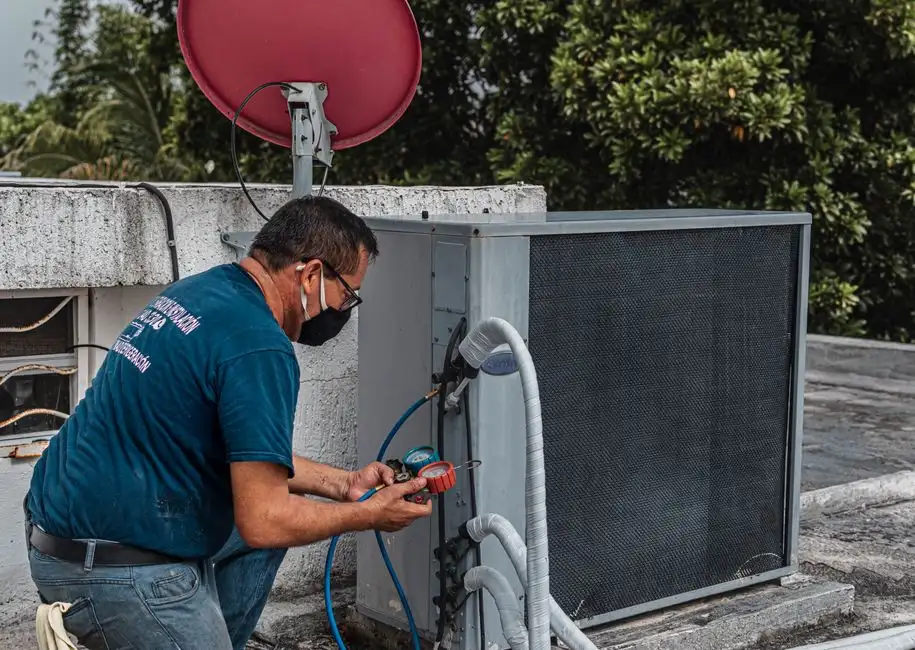
Preparing your furnace for Idaho winter means replacing the filter, testing the thermostat through a full heat cycle, clearing the intake and exhaust vents, and scheduling a professional tune-up before the first hard freeze. Do that by mid-October and you avoid the two failures we get called for most in December: a blower that never got lubricated and a flame sensor coated in summer dust.
Idaho winters are not a gradual slide. Boise drops to single digits in January, Idaho Falls and Rexburg sit below zero, and the mountain valleys around Stanley and McCall run colder still. Your furnace does not get a warm-up lap. Below is the exact sequence our technicians walk through on a fall visit, what each step costs in 2026, and the mistakes that turn a $180 tune-up into a $1,400 repair.
When to Start Preparing Your Furnace in Idaho
Start in late September or the first week of October. That is when daytime temperatures in the Treasure Valley still hit the 70s, so you can run the heat for 20 minutes without cooking the house, and it is early enough that parts are still on the shelf if something is worn out.
By the time you are reading this in November, you are not too late - you are in the second-best window. Furnaces fail on the first cold snap, not in the middle of it, because that is the first time the system runs under load since March. If your furnace has not been started since spring, do the checklist below this week, not the night before the forecast turns.
One number to keep in mind: a furnace that has sat idle for eight months has a roughly 1-in-5 chance of throwing a fault code on its first cold start. Most of those are cheap fixes caught early and expensive ones caught late.
The Idaho Furnace Winter Checklist
This is the same order we use on a Furnace Tune-Up in Idaho, minus the combustion analysis and amp-draw readings that need meters. Work top to bottom.
1. Replace the air filter
Pull the filter and hold it up to a light. If you cannot see through it, it is done. Standard 1-inch filters in a typical Boise or Meridian home should be changed every 60 to 90 days during heating season. If you run a 4- or 5-inch media cabinet, once a year is usually fine. A clogged filter is the single most common cause of a furnace that runs but does not heat - the airflow drops, the high-limit switch trips, and the burner shuts off before the house warms up.
2. Clear the vents and returns
Walk every room. Make sure no supply register is blocked by a rug, a couch, or a piece of furniture pushed against it. Then check the return-air grille - the big one, usually in a hallway or on the wall near the thermostat. A return that is 50% blocked starves the whole system.
3. Check the outdoor intake and exhaust
High-efficiency furnaces - the ones with PVC pipe running out the side wall - pull combustion air from outside and push exhaust out the same wall. In Idaho, that termination can ice over, fill with leaves, or get buried by a snowdrift. Clear it and keep it clear. A blocked exhaust on a condensing furnace trips the pressure switch and shuts the unit down, sometimes with a code that looks like a much bigger problem than it is.
4. Test the thermostat through a full cycle
Set the thermostat to heat, raise the setpoint 5 degrees above room temperature, and stand at the furnace. You should hear the inducer motor spin up, then the igniter glow, then the burners light within about 30 seconds. If you hear the blower come on but no flame, or the burners light and shut off after 5 seconds, stop and call us. That is a flame sensor or pressure-switch issue, not a thermostat issue.
5. Listen and smell
On the first heat of the season, a light burning-dust smell is normal - it is dust cooking off the heat exchanger. It should fade in 10 to 15 minutes. A metallic rattle, a screech, or a smell like hot electrical is not normal. Shut the furnace off at the breaker and get it looked at.
6. Change the batteries and check the CO alarm
Replace the thermostat batteries even if the display looks fine. Then press the test button on every carbon monoxide alarm in the house. Idaho code requires CO alarms in most residential settings, and a furnace is the most common source of CO in a home. Test them in October, not January.
Why Idaho Winters Break Furnaces
Idaho furnaces fail for reasons that are specific to how cold it gets here and how long the cold lasts.
First, the runtime. A furnace in Boise might run 30% of the day in December. In Rexburg or Driggs, it can run 60% or more. Double the runtime means double the wear on the blower motor, the inducer, and the igniter. A part rated for 15,000 cycles gets used up in three or four winters instead of seven.
Second, the temperature swing. When it is 5 degrees outside and your thermostat is set to 70, the furnace is working near its design limit. Any weakness - a dirty flame sensor, a weak capacitor, a partially blocked flue - shows up now. That is why we see a spike in no-heat calls the first week temperatures drop below 15 degrees.
Third, the dust. Idaho is dry. Between wildfire smoke in late summer, pollen in spring, and plain old household dust, filters load up faster here than in humid climates. A filter that would last 90 days in Seattle is done in 60 in the Treasure Valley.
Fourth, the age of the housing stock. A large share of homes across Furnace Repair in Boise and the surrounding valley were built between the 1970s and the 2000s, and many still have the original furnace or a replacement that is now 15 to 20 years old. Those units are at the age where a fall tune-up catches a failing inducer or a cracked heat exchanger before it becomes a mid-winter emergency.
How Do I Prepare My Furnace for Idaho Winter on a Budget?
You can do the whole homeowner-side checklist for under $50. A two-pack of quality 16x25x1 filters runs about $25 to $40 in 2026. Thermostat batteries are $5. Everything else on the list is labor you do yourself in about 45 minutes.
The professional side is where the real money is, and it is worth it. A standard Furnace Maintenance in Idaho visit in 2026 runs $120 to $220 depending on the system and how far out we are driving. That covers the filter, a combustion analysis, a flame-sensor cleaning, a blower amp-draw reading, a capacitor test, and a full safety check on the heat exchanger.
Compare that to the alternative. A no-heat call on a Sunday in January is $250 to $450 just to get a technician to the door, plus parts. A blower motor replacement is $600 to $1,100. A heat exchanger replacement - which usually means a new furnace - is $3,500 to $6,500 installed. The tune-up is the cheapest line item on the whole page.
If your furnace is 18 years or older and you have put more than $500 into it in the last two winters, the math starts to favor replacement. We walk through that decision honestly on every call, and we will tell you when repairing is the right call and when it is not. You can see the full range of what we do on our Furnace Repair in Idaho page.
Common Mistakes We See Every November
These are the ones that cost homeowners the most, in order of how often we see them.
- Waiting for the first cold snap to test the heat. Every furnace in the valley gets turned on the same week. If yours fails, you are in a queue behind 200 other people. Test it in October.
- Using the wrong filter. A MERV 13 filter in a system designed for MERV 8 restricts airflow and can cause the furnace to overheat and short-cycle. Match the filter to the system, not to the marketing on the box.
- Closing vents in unused rooms. This raises static pressure in the ductwork and can damage the blower. It does not save money the way people think it does.
- Ignoring a blinking fault code. Modern furnaces flash a code on the control board. That code tells a technician exactly where to look. Write it down before you call.
- Blocking the outdoor exhaust to "keep the cold out." We see this every year. It causes a pressure-switch lockout and, on some units, a CO risk. Never cap a furnace vent.
- Skipping the CO alarm test. A cracked heat exchanger can push carbon monoxide into the living space. The alarm is your only warning.
When to Call a Professional
Call us when the furnace lights and shuts off within a few seconds, when you smell gas, when the breaker trips on heat, when you see a fault code you cannot clear, or when the system runs constantly and the house still will not reach the setpoint. Those are not homeowner fixes, and two of them are safety issues.
Call us in October even if nothing is wrong. A fall tune-up is how you find the weak capacitor or the dirty flame sensor before it strands you in January. Our technicians carry the common parts for Carrier, Trane, Lennox, Rheem, Goodman, and Bryant on the truck, so most tune-up findings get fixed on the same visit instead of turning into a second appointment.
If your furnace has already quit, we run Emergency Furnace Repair in Idaho around the clock, including weekends and holidays. No heat in an Idaho January is not a wait-until-Monday problem.
Frequently Asked Questions
How do I prepare my furnace for Idaho winter?
Replace the filter, clear all supply and return vents, clear the outdoor intake and exhaust, run a full heat cycle at the thermostat, test every CO alarm, and schedule a professional tune-up. Do this by mid-October so any worn parts can be replaced before the first hard freeze.
When should I prepare my furnace for winter in Idaho?
Late September through mid-October. That gives you a 3-to-6 week buffer before Idaho's first sustained cold, which typically arrives in early to mid-November. If you missed that window, do the homeowner checklist now and book a tune-up within the week.
What maintenance does a furnace need before Idaho winter?
A filter change, a flame-sensor cleaning, a blower motor lubrication and amp-draw check, a capacitor test, a combustion analysis, and a heat-exchanger inspection. A professional tune-up covers all of it in 60 to 90 minutes for $120 to $220 in 2026.
Can I prevent furnace problems in Idaho winter?
Most of them, yes. Roughly 70% of the no-heat calls we run in December and January trace back to something a fall tune-up would have caught - a dirty flame sensor, a weak capacitor, a clogged filter, or a blocked vent. The rest are genuine part failures.
Who should I call to prepare my furnace for Idaho winter?
Call a licensed Idaho HVAC contractor who services your brand and stocks common parts. Furnace Pros Idaho handles fall tune-ups, repairs, and replacements across the Treasure Valley and the rest of the state. One visit covers the full checklist.
Get Help With Furnace Repair in Idaho
If your furnace has not been looked at since last winter, book the tune-up now. It is the cheapest hour you will spend on your home this year, and it is the difference between a quiet January and a cold one. Call Furnace Pros Idaho at (833) 588-3865 and we will get you on the schedule this week.