
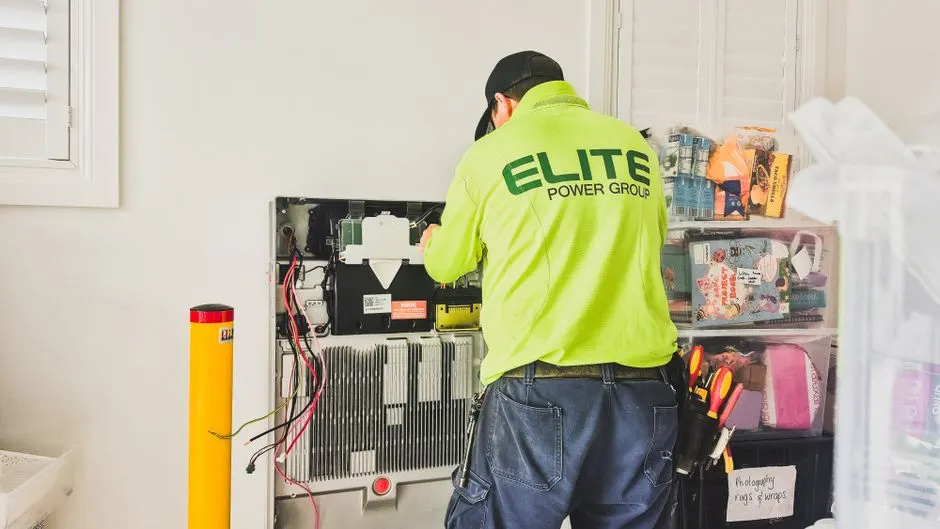
Furnace installation cost in Idaho runs $3,800 to $9,500 for a standard residential replacement in 2026, with most Boise-area homeowners landing between $4,600 and $7,200. That number covers the equipment, labor, haul-away of the old unit, and a new thermostat in most cases. What pushes you toward the top of that range is almost never the furnace itself - it's the ductwork, the venting, and how hard it is to get the old unit out of your basement or closet.
Furnace installation cost in Idaho is the total you pay to remove an existing furnace, supply and fit a correctly sized replacement, connect gas and electrical, commission the system, and pull any required permits. Below we break down the real 2026 numbers by size and efficiency, what a fair quote includes, and the mistakes that quietly add $1,500 to your bill.
How much does furnace installation cost in Idaho?
Idaho homeowners pay $3,800 to $9,500 for a full furnace replacement in 2026, and the average sits near $5,900. That's higher than the national average because Idaho homes tend to have larger heating loads - a 2,000 sq ft house in Boise or Idaho Falls needs more BTU output than the same square footage in a mild climate.
Here's how the market actually breaks down:
- Builder-grade 80% single-stage furnace: $3,800-$5,200 installed
- Mid-range 80% two-stage: $4,800-$6,400 installed
- 96%+ condensing two-stage: $6,200-$8,300 installed
- High-end modulating 97%+ with variable-speed blower: $7,500-$9,500 installed
Those are turnkey numbers for a straight swap where the existing venting and ductwork can be reused. If your flue needs to be relined for a condensing furnace, add $600-$1,400. If the ductwork is undersized or leaking badly, add $1,200-$3,500. If the furnace sits in a crawlspace or an attic with limited access, add $400-$900 in labor.
We quote these jobs every week across the Treasure Valley and eastern Idaho, and the pattern is consistent: the equipment is roughly 55-65% of the invoice, labor and materials make up the rest. Anyone quoting you $2,900 for a full install is either using a discontinued unit, skipping the permit, or planning to surprise you with add-ons after the old furnace is already on the truck.
What factors affect furnace installation cost in Idaho?
Six things move the price more than anything else: furnace size, efficiency rating, venting type, ductwork condition, access, and whether you need any electrical upgrades. Idaho's climate adds a seventh - altitude.
Altitude and sizing
Most of Idaho sits above 2,500 feet, and Boise is at 2,700. Gas furnaces lose roughly 4% of their rated output for every 1,000 feet above sea level, so a furnace that's correctly sized in Portland is undersized in Meridian. We derate the input and often step up one size to compensate. That step-up alone can add $300-$700 to the equipment cost.
Efficiency rating
An 80% furnace dumps about 20% of the gas you pay for out the flue. A 96% condensing unit recovers most of that. The jump from 80% to 96% costs $1,800-$2,600 more up front, and in Idaho's heating climate it usually pays back in 5-8 years through lower gas bills.
Venting
An 80% furnace vents into an existing metal flue or chimney. A 96% condensing furnace produces acidic condensate and needs PVC intake and exhaust pipes run to an exterior wall - $600-$1,400 if there's a clean path, more if we're cutting through finished space.
Ductwork
If your ducts are original to a 1970s or 1980s home, they're probably leaking 20-30% of the air you're paying to heat. Sealing and rebalancing runs $1,200-$2,200. Full duct replacement in a 2,000 sq ft home runs $3,500-$6,000.
Access and removal
A furnace in an unfinished basement is a two-hour removal. A furnace in a finished closet with a low ceiling and a gas line running across the front is a four-hour job with two technicians. That difference shows up as $400-$900 on your invoice.
Electrical and permits
Older homes often need a dedicated 15-amp circuit for the new furnace, a new disconnect, or a condensate pump outlet. Budget $250-$800. Idaho permits vary by jurisdiction - Ada County, Bonneville County, and the City of Boise each have their own fee schedules, typically $75-$250.
Furnace installation cost by size in Idaho
Furnace installation cost by size in Idaho scales roughly linearly with BTU output, and sizing is the single most important decision on the job. An oversized furnace short-cycles, wears out faster, and leaves cold rooms. An undersized one runs constantly and never catches up on a 10°F night.
Here's what we see for typical Idaho homes in 2026:
- 60,000 BTU (1,000-1,300 sq ft): $3,800-$5,600 installed
- 80,000 BTU (1,300-1,800 sq ft): $4,400-$6,600 installed
- 100,000 BTU (1,800-2,400 sq ft): $5,200-$7,800 installed
- 120,000 BTU (2,400-3,000 sq ft): $6,000-$9,000 installed
- 140,000+ BTU (3,000+ sq ft or dual-zone): $7,000-$9,500+ installed
A proper Manual J load calculation is what determines which of those you actually need. We run one on every install - it accounts for window area, insulation R-value, ceiling height, and design temperature. Skipping it and guessing from square footage is how homeowners end up with a 120,000 BTU furnace heating a 1,600 sq ft ranch.
If you're not sure whether you need a full replacement or just a repair, our team handles Furnace Repair in Idaho and can tell you honestly which one makes financial sense. A $400 repair on a 12-year-old furnace is usually the right call. A $1,800 repair on a 22-year-old unit is not.
High-efficiency furnace installation cost in Idaho
High-efficiency furnace installation cost in Idaho runs $6,200 to $9,500 for a 96%+ condensing unit, roughly $1,800-$2,600 more than an 80% furnace of the same size. The premium buys you a secondary heat exchanger that captures heat the standard unit sends up the flue.
Whether it's worth it depends on your gas usage. A typical Idaho home burns 700-1,100 therms per heating season. At current Intermountain Gas rates, moving from 80% to 96% efficiency saves roughly $180-$320 per year. That's a 6-9 year payback on the upgrade - and condensing furnaces typically last 18-22 years versus 15-18 for standard units.
Two things to know before you commit:
- Condensate management matters. A 96% furnace produces 2-5 gallons of acidic water per day in winter. It needs a drain path, a neutralizer, and freeze protection if the furnace is in a garage or attic.
- Cold-climate performance. In eastern Idaho where design temps hit -10°F, a condensing furnace still delivers rated efficiency. In a poorly insulated crawlspace install, the condensate line can freeze. We heat-trace those lines as standard.
If you already own a high-efficiency unit and it's acting up, High-Efficiency Furnace Repair in Idaho is a different job than standard furnace work - the diagnostic sequence and parts are specific to condensing systems.
What a fair furnace installation estimate in Idaho includes
A fair furnace installation estimate in Idaho is a written, itemized quote that lists the model number, BTU input and output, AFUE rating, and every line item of labor and material. If you get a single number on a business card, that's not an estimate - that's a guess.
Here's what should be on the page:
- Furnace make and model number, with AHRI certificate reference
- BTU input and output, and the Manual J load calculation result
- AFUE rating and whether it qualifies for any utility rebate
- Line item for permit and inspection
- Line item for venting, including flue liner or PVC run
- Line item for any ductwork sealing or modification
- Thermostat model and whether it's included
- Haul-away and disposal of the old unit
- Labor hours and warranty terms on both parts and labor
We also recommend asking for the commissioning report. A properly installed furnace gets a combustion analysis, static pressure reading, and temperature rise check before the technician leaves. If a contractor can't tell you what your static pressure is, they didn't measure it.
Homeowners in older neighborhoods - especially around Furnace Repair in Boise where a lot of the housing stock dates to the 1950s through 1970s - should expect ductwork to be a real line item, not an afterthought. Those homes were built for gravity furnaces and the duct systems rarely match modern airflow requirements.
Common mistakes that inflate your furnace installation cost
The most expensive furnace installation mistakes are the ones made before the truck arrives. Here's what we see repeatedly:
- Choosing on price alone. The low bid is usually low because something is missing - a permit, a load calculation, a combustion test, or a warranty that actually covers labor.
- Skipping the Manual J. Guessing size from square footage leads to oversized equipment, short cycling, and a furnace that dies at year 12 instead of year 20.
- Reusing failing ductwork. A new 96% furnace pushing into 30%-leaking ducts delivers 80% performance at 96% cost.
- Ignoring the flue. An 80% furnace into a corroded chimney liner is a carbon monoxide risk. We reline or replace on most pre-1990 installs.
- No permit. Unpermitted installs surface at resale, and the buyer's inspector will find it. Retroactive permits plus corrections run $500-$1,500.
- Financing the wrong way. A 12-month same-as-cash promo that you can't pay off in 12 months turns a $6,000 install into a $7,400 install.
One more: don't let anyone talk you into a furnace size you didn't ask for without showing you the load calculation. If the number goes up by 20,000 BTU and the explanation is "you'll be more comfortable," ask for the math.
When to call a professional
Call a licensed HVAC contractor when your furnace is 15+ years old, when you've had two or more repairs in the last three years, when you see a cracked heat exchanger, or when your gas bill has climbed more than 20% year over year without a rate increase. Those are replacement signals, not repair signals.
Call immediately if you smell gas, hear a rumbling or booming sound at startup, or see soot around the burner compartment. Those are safety issues, and we run Emergency Furnace Repair in Idaho for exactly those calls.
For everything else - a furnace that's just old, inefficient, or costing you more every winter - the right first step is a proper assessment. Furnace Pros Idaho installs and services furnaces across the state, and we'll tell you straight whether you need a $400 repair or a $6,000 replacement. No pressure either way.
Frequently Asked Questions
How much does Furnace installation cost in Idaho?
Furnace installation in Idaho costs $3,800 to $9,500 in 2026, with the average around $5,900. A standard 80% furnace for a 1,500 sq ft home typically lands at $4,400-$6,600 installed. High-efficiency condensing units run $6,200-$9,500.
What factors affect Furnace installation cost in Idaho?
The six biggest are furnace size (BTU), efficiency rating (80% vs 96%+), venting requirements, ductwork condition, access to the unit, and any electrical upgrades. Idaho's altitude above 2,500 feet also forces a size step-up on most installs, adding $300-$700.
Is Furnace installation worth it in Idaho?
Yes, if your furnace is 15+ years old or you've had repeated repairs. Idaho's heating season runs October through April, and a 96% furnace saves $180-$320 per year over an 80% unit. Most homeowners break even in 6-9 years and gain reliability through the coldest months.
How long does Furnace installation take in Idaho?
A straight swap takes 4-6 hours with two technicians. Add 2-3 hours if venting needs to be run, and a full day or more if ductwork is being sealed or replaced. We schedule most Idaho installs as a single-day job and leave the heat running the same evening.
Can I finance Furnace installation in Idaho?
Yes. Most Idaho HVAC contractors offer financing through third-party lenders, typically 0% for 12-18 months or fixed-rate terms up to 120 months. On a $6,000 install, a 60-month plan at 7.99% runs about $122 per month. Ask for the full amortization before signing.
Get help with Furnace Repair in Idaho
If your furnace is on its last winter, we'll give you a straight number - equipment, labor, permit, and any ductwork - before we start. Call Furnace Pros Idaho at (833) 588-3865 and we'll schedule a load calculation and written estimate at your home.